Introduction
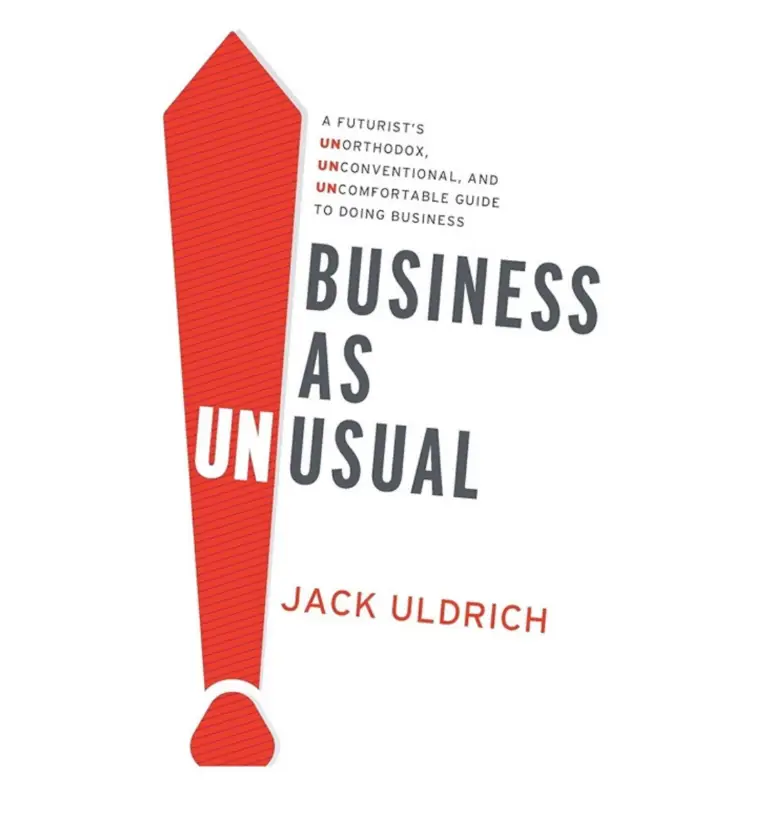
Author: Jack Uldrich
I had the opportunity to actually meet Jack Uldrich back in 2020, right before the pandemic. The previous financial advisor I worked for would host a client appreciation event at the start of each year and it would be like a mini one-day conference. It was actually quite impressive to see this happen behind the scenes, but I’m going on a little bit of a tangent here.
One of the speakers she had brought was Jack, and his job title always fascinated me. He called himself a futurist. He wasn’t claiming he had hidden powers to see the future, but he tried to look at current day trends and predict where those trends would be taking us.
This book was given to everyone who attended the client event, and while I read it back in the day, I decided to pick it up again just to see if looking at it with a new perspective would help me understand it better. When I first read the book, I thought to myself “well duh, of course the future is going to look different than now.” but having read it again, I’m not coming in with an arrogant attitude. Of course the future is going to change.
This time around, the book helped me get an understanding of how to prepare for the changes that the future beholds, even if we don’t know exactly what those changes are.
This is such an easy read, you can probably finish it in a day if you wanted to, because it’s not written in a traditional format. Some pages are just pictures, some are quotes, and some have full fledged ideas. The scattered layout makes it a much easier read, especially if you don’t want to use a lot of brain power.
Think Outside the Box
If I had to summarize the book in the simplest terms, it’s basically telling you to think unconventionally, think outside the box.
This is a perspective I’ve tried to adopt for myself not just in my professional life, but even personally.
It’s not about thinking outside the box just to be different or unique. It’s about looking at things from a different perspective to be able to understand there’s more to the story than what you’re seeing. Sometimes it’s hard to imagine a different perspective because we get comfortable with the way things are and how we expect them to be. It’s uncomfortable to step out of your existing shoes and try to put new ones on, but before you know it, the new pair stops hurtin
Failure is the Key to Unlocking Success
Did you know that the reason WD-40 is called that is because there were 39 iterations of it that failed?
Another theme of the book is getting comfortable with the idea of failure. The fear of failure/rejection prevents a lot of people from trying in the first place. The author summarizes it perfectly with this one sentence:
“The riskiest thing to do is play it safe”
This is something I personally am trying to still work on everyday of my life. I do occasionally have the fear that this business I started might not workout, and it stresses me out, but I zoom out and I think to myself that I still did the things a lot of people would have been too scared to try. I think in today’s world of social media, people feel like anything other than perfection is failure, but no one and nothing is perfect. Even if this doesn’t work out, at least I tried.
The book gives another great example of avoiding perfection by using the story of Persian rug makers. The rug makers will usually make a deliberate mistake in the beginning of the process, that way the stress of trying to complete the rug mistake-free is gone, and they can focus on just doing what they have to do.
Most of the time, we’re the only ones who remember our failures, everyone else is worried about their own lives. So if you fail, acknowledge what went wrong, learn from your mistakes, and get up and keep pushing forward.
The Future is Changing Faster than we Think
I’m sure most of us can feel this, especially those of us who interact with new technologies daily.
It feels like the other day where AI could barely put together a video of Will Smith eating spaghetti, but now, AI can make short films. Take any other example, like the internet or smart phones, and you realize that the pace of change is much faster now than it was 20 or 30 years ago. Sometimes I struggle with all of the changes we’re seeing, and it can be overwhelming to think of, but it’s just the reality we are living in today, whether you like it or not.
The book talks about how the future technologies of tomorrow are going to be the convergence of technology that already exists today. The example it provides is Uber.
Back when Uber first launched, the following technologies existed: GPS, cloud computing and smartphones. Uber put those three concepts together, and built an app that most people nowadays can’t imagine what it’s like NOT having the app.
We don’t have to try to be the person that invents the new technology people use, but we do have to understand that what works now will probably not be the same methods that work in the future, and in today’s environment, where things are changing as quick as they are, you have to be able to adapt and adopt.
Summary
I feel like a lot of the concepts of this book are stuff people “already know.”
I think it’s still a good idea to get a refresher, because the book helps support it’s claims using real examples/stories people can relate to, or at least use to understand the story better. Some of the things it talks about are uncomfortable to think about, but that’s exactly what one of the points of the book is: get comfortable with the uncomfortable.
Disclosure
This content is provided for informational and educational purposes only and should not be construed as personalized investment, tax, or legal advice. No advisory relationship is created by reading this article. Investment advisory & financial planning services are offered only pursuant to a written agreement through Noor Financial Services, a Registered Investment Adviser. Please consult with a qualified professional regarding your specific financial situation.